


Experience driving through flooded roads
Driving is a skill amphibious important when you own a car, especially in Vietnam, where just a few heavy rains flooding the roads were like rivers. If you do not grasp this skill, many people prone to stall the car scene while wading, and suffered severe mistakes damaging his car.
To judge the depth of water
Know who knew one hundred battle hundred wins, first, you have to clear your vehicle has high or low roar. If you are a regular sedan, altitude about 16-18 cm will roar, and the second vehicle roared higher demand - from 20-25cm, and naturally also better wading.
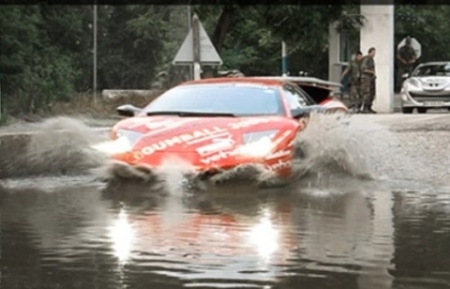
Low roar as well Amphibious Lamborghini supercar
The car can safely swim in the water level on par with the wheel center, with good road conditions, not opposite vehicles were tossed into the water.
The reason it is a safe level for intake ducts usually level with the car hood, so the water level in the country has yet to be inlet duct, and once the water flooded the engine here which is already flooded by powerful suction inlet pipe water inside.
Watch the cars ahead, trunk, sidewalks ... to guess whether his car was not able to wade through. Be aware of and anticipate their wheel position will roll over, the data is not the most shallow. Roads in Vietnam are usually higher in the middle and pretty big slope into 2 sides.
Need to look closely at the car went forward, to avoid the potholes buffalo drive, rugged places. In particular, notice manholes, because if the car you are laid down, the only available bread called rescuers.
Calm, confident, proper technique
Hurry while driving amphibious will just make you make mistakes. After having contemplated the vehicle can wade through flood waters, take confidence and calm to drive through.
Remember the right path you have planned for the car over, and observe whether there are obstacles that you have to stop what the amphibious are not, such as red light, motorcyclists, bicyclists, wading, other car stalled ... If yes, calmly waiting, when roads are flooded following vehicles will not be able to understand the hurry was, and most will not honk urge you pass.
Turn off all electrical systems in the vehicle, such as air-conditioning, radio, VCD ... to the engine maximum power.
Along with the ability to predict and anticipate the road, drive slowly through flooded waters. Be sure not to jab the gas, every time your station paddy will make a stronger wind to suck, and suck all the water into the engine. Go at a moderate speed, low, gas well and not too slow, from 1500 rpm to 2000 rpm / min is given.
If the floor of the car, you should run the number 1 or 2. If the automatic car, set low mode for wading.
What if the car breaks down?
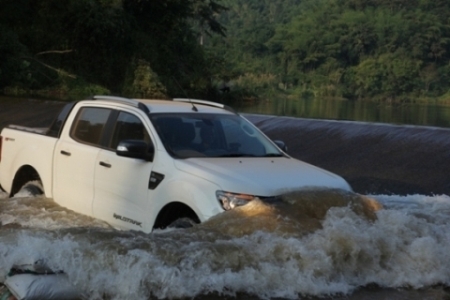
Absolutely not restart the car, when you restart, the water will flow into the engine and powerful compressor, causing water hammer phenomenon, making curved marginal hands, a broken arm or broken engine block boundary, repair costs will very expensive.
Try to push the car out of the wetlands, or emergency call (be patient because rescuers often very far from that, the city flooded not only your car that is stalled).
After wading
Even if your car has not stalled and successful amphibious, water certainly still somewhere in the car, so let's keep moving around 5-10 minutes longer or leave a car running. Do not turn off the engine immediately after wading in the water to escape the car - evaporated out.
Take your car maintenance, oil changes, lube bearings back as soon as possible after wading, because rain water will cause rapid corrosion.
The "tactical" More
If you are confident in the power system sealed, waterproof and less prone to short, can turn your car into an amphibious submarine.
High exhaust pipe connector and vehicle inlet over his head, so that the water can not touch is the way the cars or off-road use, you absolutely can use to upgrade his car into an amphibious vehicle.
Remember the remaining portion to be submerged sealed to ensure safety.
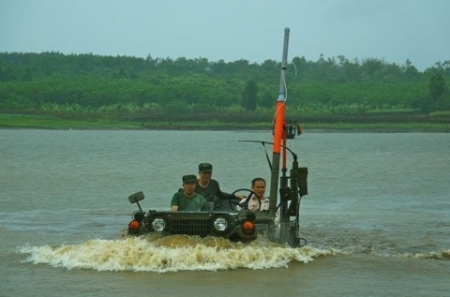
The degree inlet duct, exhaust climb to amphibious
Reversing vehicles through flooded roads are way off drive CTS leave, still useful until today.
Driving backwards will cause the water level in the lower part of the car, without swamping the short inlet duct or electrical systems. The deeper the water flooded the car you need to drive as fast backward at the top level to be lowered vehicles. The driver stepped amphibious requires extreme skill to drive back to make up, with the calm and reckless.
After all, the cars are designed to go on the road rather than a means of water transport, should not be excessively risky to costly repairs or even turn your vehicle into a pile of iron Marine debris while walking with God.
Wishing you a safe driver!


